Sometimes weeks pass before spring feels believable.
When the forecast still calls for single digits Fahrenheit—or dips toward –20°C—and winter hasn't loosened its grip, my mind is already listening for peepers, one of the first signs that spring has finally arrived.
That thin, rising chorus drifting from ditches, vernal pools, and low woods is one of the earliest true signals that the year is turning.
Small chorus frogs.
Widespread across eastern North America.
Rarely more than an inch long.
The name crucifer comes from Latin for "cross-bearing"—a nod to the dark, cross-shaped marking on their backs. Often faint, sometimes bold, always distinctive once you learn to look for it.
Spring peepers survive what seems impossible.
They endure below-freezing temperatures by flooding their bloodstream with glucose—a natural cryoprotectant produced by the liver. It acts as antifreeze, protecting cells while organs like the heart slow into guarded dormancy. Frozen and waiting.
When warmth finally returns, they thaw.
And sing.
Despite their size, they play an outsized role. Spring peepers are voracious insectivores—one tiny frog consumes hundreds of ants, beetles, flies, and spiders, quietly helping keep insect populations in balance long before the garden wakes.
You don't usually see them busy at their work.
But in early spring, you don't have to.
Their sound fills the dark edges of the landscape—high, insistent, hopeful—reminding me that life has been waiting all winter, ready to rise the moment conditions allow.
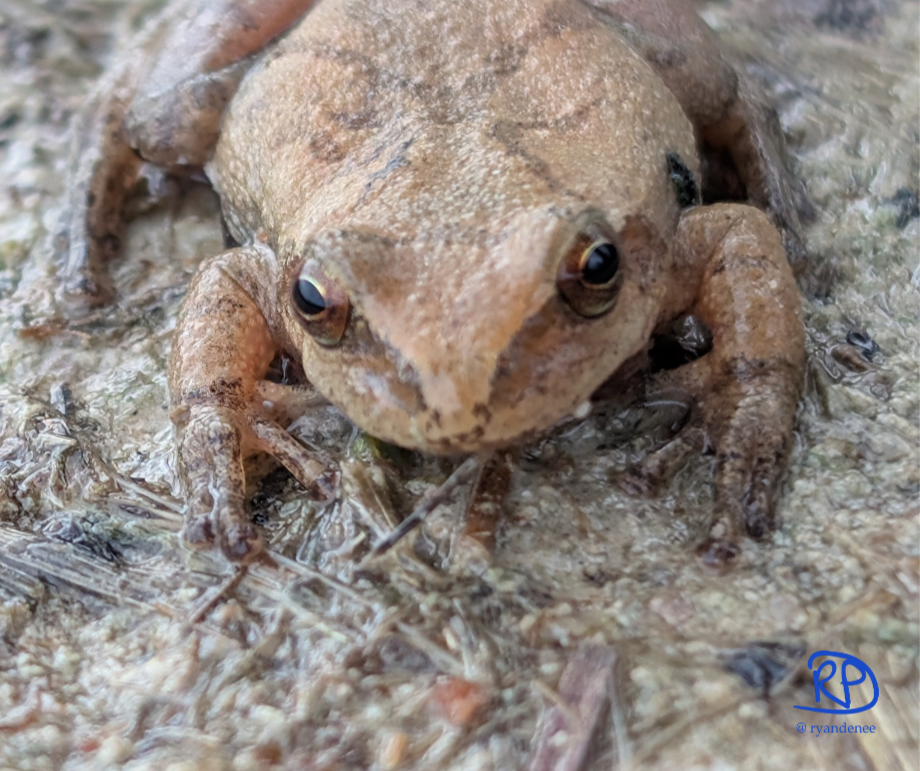
Spring Peeper (Pseudacris crucifer)
