My First Propagated Plant
I remember climbing.
Tall metal shelving at the back of my dad’s greenhouse, the kind meant for boxes and inventory, not kids. I was eight, maybe ten, and already tall enough that the gravel floor felt far away. I’d pull myself up using the structure of the shelving, careful but confident, heading to the top shelf—more than ten feet high—where my project lived.
Behind stacked boxes and forgotten supplies, I built a small fort — nothing elaborate, just enough space to crouch and work. It sat in the tropical section of the greenhouse, where winter never quite reached. The air was warm and humid, heavy with the smell of peat moss and soil. Even in January, it was a perfect place to have my own small corner to grow plants.
This was one winter, as far as I remember. I mostly worked alone. One brother was too old for forts by then, and the other too young to climb that high. We lived just across the street from the garden center, and we were there all the time — after school, weekends, any free moment. Looking back, my mom probably just wanted us out of the house.
I wasn’t breaking any rules by building a fort high up in the shelving. My parents were relaxed about this kind of freedom. There was some danger, sure — climbing shelves, working near heaters — but my brothers and I were trusted to learn from the environment itself. To pay attention. To make decisions. We didn’t always get it right.
The Reznor gas heaters ran nonstop during winter. When they turned on, they sounded like jet engines to my young ears — loud, powerful, and a little scary. They were perfect for drying gloves soaked from hours of playing in the snow outside. Once, I put a pair too close and melted part of the plastic palm. The smell was terrible. Looking back, I was lucky not to get burned. That mix of comfort and danger felt normal back then.
My fort kept me busy while my dad worked with customers out front. It was a way of creating my own small world inside his larger one — staying out of the way, not asking too many questions, but still learning by watching.
I quietly gathered extra pots. A little soil. Jade plant leaves taken from the stock plants he was selling—just enough, not many. Jade was probably chosen because it was available and forgiving. Thick leaves, slow growth, a plant built for patience. I placed the leaves in the soil and waited.
I don’t remember experiencing failure. The conditions must have been just right: warmth from the heaters, humidity in the greenhouse, light filtering down from above. Mostly, I remember checking at least once a week. Climbing back up, pulling boxes aside, and examining closely.
The moment of success was unmistakable. A shoot — the start of a new plant.
Roots were just one part, but that first sign of new growth — that was different. That was the confirmation. One plant was growing more. Not by chance, but because I had done something right. If I told anyone, it would have been my older brother first, convincing him to climb up and take a look at what I had started.
Back then, it just felt special. I had helped something grow. It didn’t occur to me that this wasn’t common knowledge. I had seen it so often while growing up that it seemed ordinary. It would take years for me to realize how unusual that understanding was.
Jade has a way of holding onto time. It doesn’t rush. Over the years, it thickens and becomes woody, almost like a tree. Only much later does it bloom — quietly, with small pale flowers and a scent that feels bigger than their size. I didn’t realize this until decades later, standing in a colleague’s greenhouse.
I now keep a jade plant in my office. It’s not the same one, but it’s the same species. It reminds me of that winter — climbing shelves, checking leaves, learning that care can multiply life. That you can help one plant become many — and that this, quietly, might be a vocation.
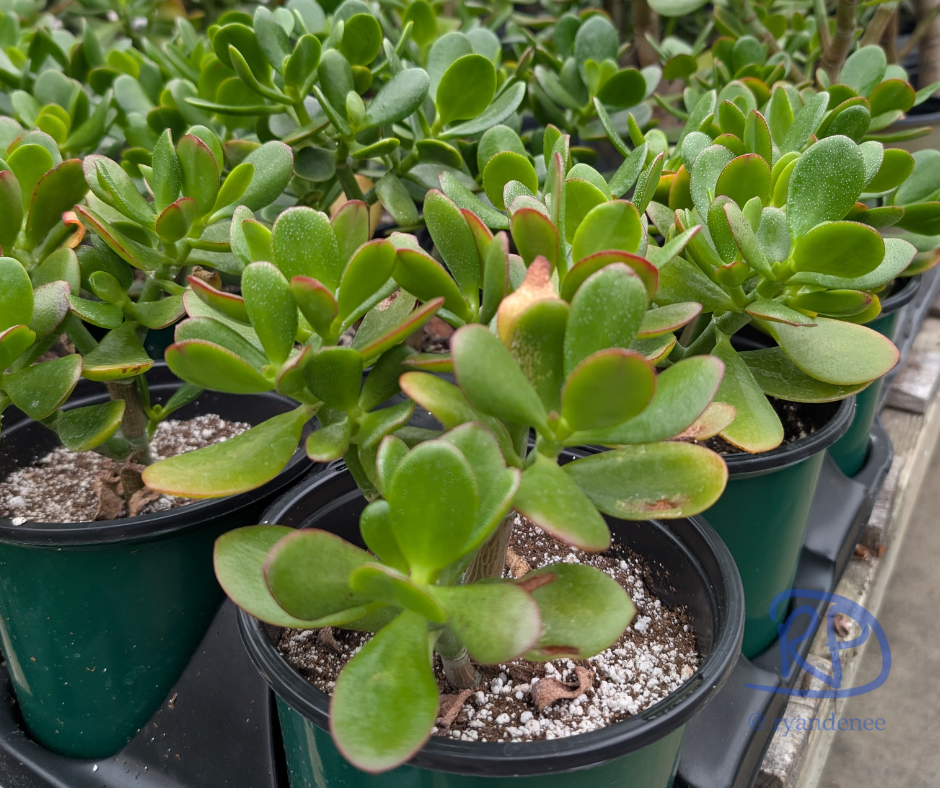
Jade plant (Crassula ovata)
