#002 - Western Conifer Seed Bug (Leptoglossus occidentalis)
You usually notice this one indoors.
Large. Brown. Slow-moving.
Often mistaken for a stink bug — but it isn’t.
Not a stink bug
It’s a true bug in the leaf-footed bug family. Different lineage. Different habits.
Heat seeker
Western conifer seed bugs can sense infrared light — heat. That helps explain why they turn up on windows, walls, and inside homes in fall.
Convincing disguise
In flight, they buzz low, like a bumblebee. A flash of orange and black on the abdomen helps sell the illusion.
Built-in camouflage
Their flattened, “leaf-footed” hind legs break up the outline — part leaf, part shadow.
Defensive scent
Handled or threatened, they release a sharp odor:
pine resin, bitter almonds, sometimes citrusy apples.
Named for what they eat
“Seed bug” is literal. They feed on developing conifer seeds, quietly thinning the next generation and helping keep forests in balance.
On the move
Native to western North America. They reached the East Coast in the 1990s — and are not native to Ohio.
Winter strategy
They overwinter in groups. During that time, they become food for bluebirds, nuthatches, and small mammals.
Climate signal
Their life cycle shifts with temperature, making them useful indicators for scientists tracking climate change.
A bug that looks accidental indoors — but is anything but accidental in the landscape.
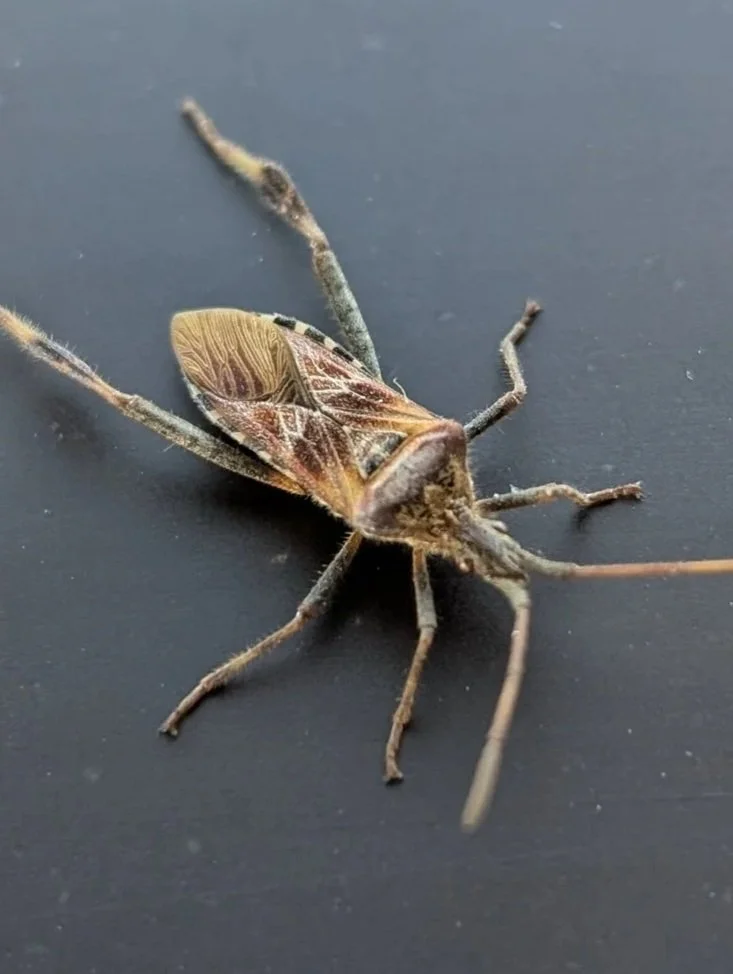
Western Conifer Seed Bug (Leptoglossus occidentalis)
