#001 - Bold Jumping Spider
Phidippus audax - Bold Jumping Spider
I usually notice them because of the pause.
A tiny, dark shape on a fence post or leaf edge, suddenly still—then turning unmistakably toward me. Not away. Toward. A spider that looks back.
The bold jumping spider doesn’t build a web to wait for a chance; it hunts with purpose. Its thick front legs, compact body, and alert posture give it a readiness rather than nervousness. Its black body often features three spots on the abdomen—usually white, sometimes yellow or orange in juveniles—crisp in some and smudged in others. In good light, its chelicerae gleam with iridescent green or blue, looking metallic and unexpected.
They are frequent, but never boring.
Jumping spiders depend more on vision than vibration. Their large, forward-facing eyes provide them with depth perception that most other spiders lack. You can notice this in how they move: deliberate steps, slight head tilts, and careful distance judgments before they leap. When they jump, it’s firm and confident. No scrambling. No second-guessing.
In the garden, Phidippus audax is a quiet helper. It preys on flies, beetles, caterpillars, and other small arthropods—many of which are pests that feed on leaves and stems. It does this without chemicals, without webs draped across blooms, and without fuss. It hunts during the day, often in plain sight, as if unconcerned with being seen.
Despite the name, bold doesn’t mean aggressive. These spiders rarely bite, and when they do, the effect on humans is mild. Most encounters end with a moment of mutual observation—two creatures assessing one another across a few inches of air.
They overwinter as juveniles, hidden in silk shelters under bark, stones, and leaf litter, emerging when temperatures rise. By summer, they are fully active—hunting, mating, and building small silken retreats where they rest or guard egg sacs. Their lives are short but complete.
What I like most about Phidippus audax is how it defies expectations. Many people dislike spiders until they encounter this one. It doesn’t follow the typical fear script. It’s too expressive. Too visible. Too attentive.
In a garden centered on care—care for plants, soil, insects, and people—it feels like a fitting resident. A reminder that not all predators are hidden, and not all helpers are subtle.
Sometimes stewardship begins with noticing who is already watching us back.
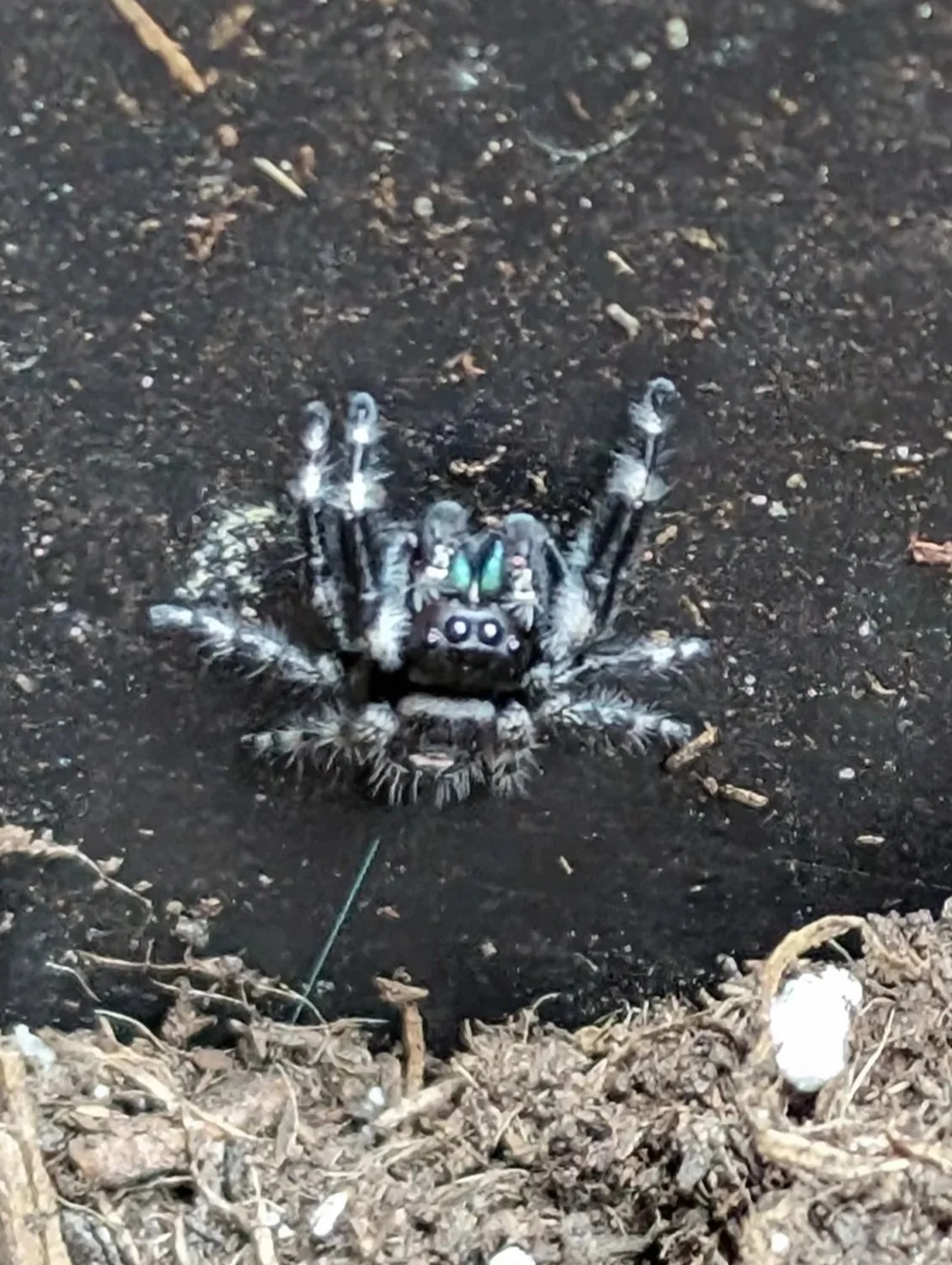
Bold Jumping Spider (Phildippus audax)
