#006 - Hickory Borer (Megacyllene caryae)
A native longhorn beetle
On warm spring days, this slender beetle sometimes appears on the sunlit side of a recently fallen hardwood.
At first glance, it looks like a wasp.
The resemblance is deliberate — a small, effective piece of mimicry that has kept the species out of trouble for a very long time.
Jet black with yellow bands and a distinctive W-shaped marking across the wing covers. Reddish legs. Long black antennae. Adults run about 2–3 cm long and are active from April through June, most visible on sunny afternoons when the wood is warm.
They're often confused with the locust borer — similar coloring, same bold pattern — but the hickory borer appears earlier in the season, before the goldenrod blooms.
It favours hickory, as the name suggests, but will use many hardwoods. Freshly dead or weakened trees. Wood that is beginning its long return to the soil.
The larvae tunnel through it quietly.
Their work is slow and mostly hidden, but it matters. By breaking down fallen hardwood, they help return nutrients to the ground and keep the forest cycle moving. Not a threat to living trees. Just another small partner in a healthy woodland, doing the work that doesn't get noticed until you start paying attention.
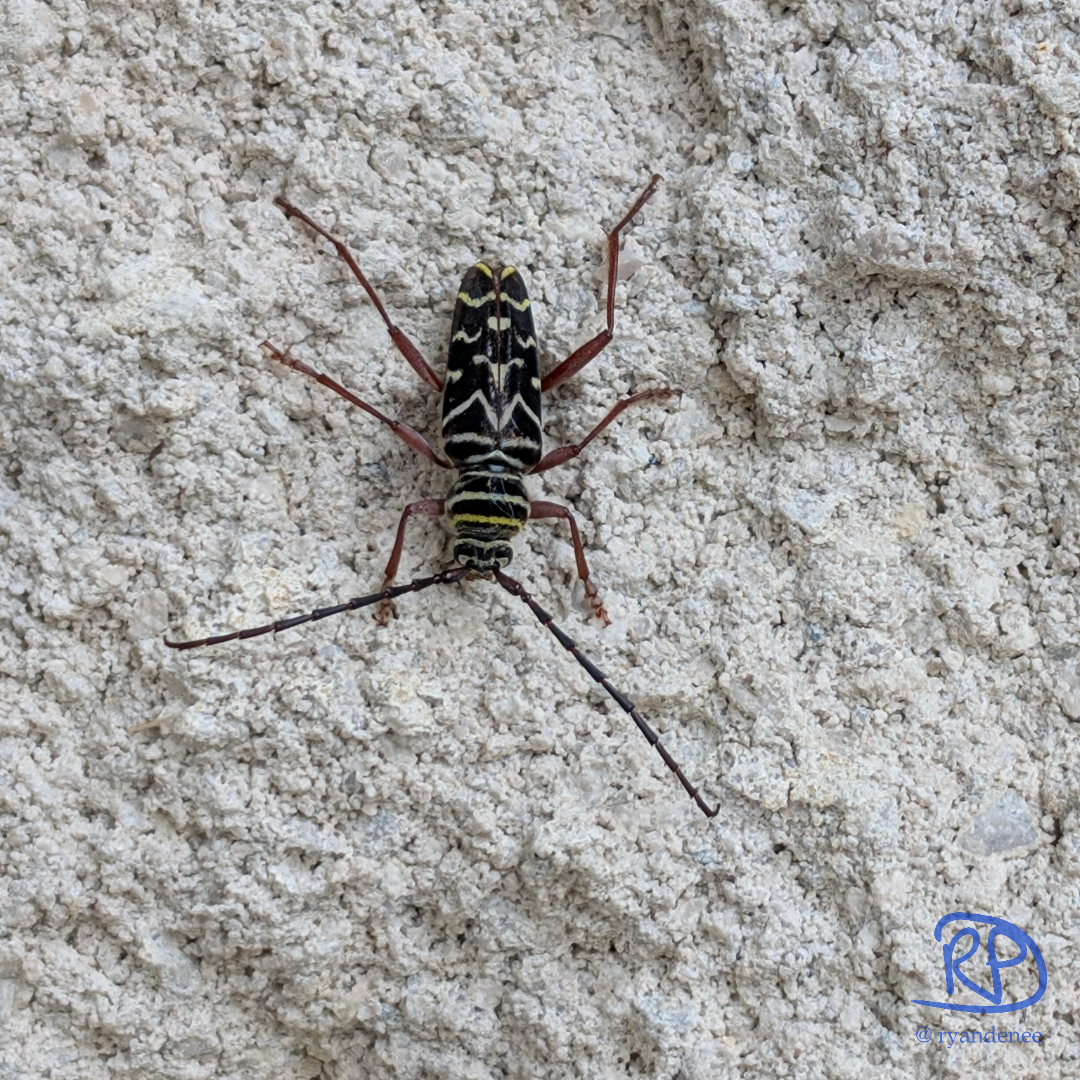
Hickory Borer (Megacyllene caryae)
